Garden doors for hotel courtyard gardens
Imagine stepping from the bustling energy of a hotel lobby into a secluded, verdant oasis. This transformative experience hinges on a single architectural element: the garden door. More than a mere entryway, a thoughtfully chosen garden door serves as the pivotal threshold between curated interior luxury and the serene, natural beauty of a courtyard garden. It frames the view, invites exploration, and seamlessly blends indoor and outdoor living—a critical design consideration for hotels aiming to elevate guest experience. The right door enhances ambiance, ensures security, and withstands the elements, all while complementing the property’s aesthetic. In the realm of hospitality design, selecting the perfect garden door is not just about access; it is about creating a memorable and fluid journey into tranquility.
Seamlessly Connect Indoor Luxury with Outdoor Serenity: The Aesthetic and Functional Role of Garden Doors
Garden doors serve as the primary architectural threshold between a hotel’s curated interior luxury and the cultivated serenity of its courtyard. Their performance is defined by a synthesis of material engineering, structural integrity, and precise manufacturing standards, ensuring they function as a durable, high-performance building envelope component.
Material Composition & Core Stability
The structural performance begins with the door slab’s core. Laminated Veneer Lumber (LVL) cores are engineered for dimensional stability, with cross-laminated layers minimizing warping and twist under variable humidity. For composite constructions, the Wood-Plastic Composite (WPC) ratio is critical. A formulation with a wood flour content of approximately 60% balanced with high-impact PVC and binding agents achieves an optimal density (≥ 1.2 g/cm³). This provides the authentic grain texture of wood while drastically improving resistance to moisture absorption, typically resulting in a thickness swelling rate of less than 0.8% after 24-hour immersion.
Performance Specifications & Compliance
Doors must meet stringent international standards for safety, environmental impact, and quality assurance. Key certifications and performance metrics include:
- Fire Safety: Core materials and glazing systems are rated to relevant standards (e.g., EN 13501-1 or ASTM E84), with Class B/C ratings achievable through intumescent seals and specialized glass.
- Emissions: All composite materials and adhesives must comply with E0 or E1 formaldehyde emission grades (ISO 12460), ensuring indoor air quality.
- Quality Management: Manufacturing under ISO 9001 certified processes guarantees batch-to-batch consistency in tolerances and finish.
- Thermal & Acoustic Insulation: The overall door assembly’s U-factor is a function of the thermal break in the frame profile and the insulating glass unit (IGU). A typical configuration with a 48mm triple-pane low-E argon-filled IGU and a polyamide thermal break can achieve a U-value of ≤ 1.1 W/(m²·K). Acoustic performance, measured as Rw (C; Ctr), can reach 40 dB or higher with laminated glass and perimeter seal compression.
Functional Advantages for Hotel Applications
- Moisture & Weather Resistance: Engineered materials exhibit minimal linear expansion (< 0.5mm/m at 80% RH) and high surface hardness (Shore D > 75), resisting scratches, swelling, and degradation from UV exposure.
- Operational Longevity: Heavy-duty, stainless steel multi-point locking hardware and concealed, adjustable hinges rated for ≥ 100,000 cycles ensure secure, silent, and reliable operation under high-frequency use.
- Seamless Transition Engineering: Low-profile, high-strength threshold designs (max. height 12mm) and slim sightline frames maximize the clear opening, facilitating effortless movement and an unobstructed visual connection. Sliding systems feature precision-rolled stainless steel ball-bearing tracks for smooth, single-finger operation of large-format panels.
Technical Parameter Summary
| Parameter | Typical Specification | Test Standard / Note |
|---|---|---|
| Door Slab Swelling (24h) | ≤ 0.8% | ISO 16983 (Thickness) |
| Formaldehyde Emission | E0 / ≤ 0.5 mg/L | ISO 12460 (Perforator Method) |
| Thermal Transmittance (U-value) | 1.0 – 1.3 W/(m²·K) | EN ISO 10077 / Calculated for full assembly |
| Acoustic Insulation (Rw) | 38 – 42 dB | EN ISO 10140 (Lab Test) |
| Surface Hardness | ≥ 75 Shore D | ISO 7619-1 |
| Air Permeability | Class 4 (600 Pa) | EN 12207 |
| Water Tightness | Class 9A (≥ 600 Pa) | EN 12208 |
Engineered for High-Traffic Durability: The Structural Integrity of Hotel-Grade Garden Doors
Hotel-grade garden doors are structural components, not merely aesthetic elements. Their integrity is defined by the composite engineering of the door leaf and the precision of its hardware integration, designed to withstand constant cycling, environmental stress, and public use.
Core Material Engineering: The Foundation of Durability
The structural performance originates from the door leaf’s composite construction. A rigid, torsion-resistant core is non-negotiable. Laminated Veneer Lumber (LVL) or engineered timber cores provide dimensional stability, resisting warping and twist under thermal-humidity cycles far superior to solid timber. This core is encapsulated within a high-performance cladding material.
For exterior applications, Wood-Plastic Composite (WPC) or mineral-based cladding is specified. Key performance metrics are:
- Density & Hardness: High-density WPC (≥1.2 g/cm³) ensures impact resistance and a low rate of surface deformation. Shore D hardness ratings above 65 are typical for hotel-grade profiles.
- Moisture Management: Absorption rates must be below 1% by volume (per 24h immersion, ASTM D570). This virtually eliminates swelling and fiber saturation that compromises operation.
- Thermal & Acoustic Performance: Multi-chamber profiles with continuous thermal breaks achieve U-factors as low as 1.0 W/(m²·K). Integrated sealing systems deliver sound reduction of 35-40 dB (Rw).
Technical Compliance & Safety Standards
Material selection is governed by international standards that ensure long-term performance and safety in a commercial setting.
- Fire Performance: Core and cladding materials must meet Class B-s2, d0 or better (EN 13501-1) or equivalent ASTM E84 ratings for limited combustibility and low smoke development.
- Emission Standards: All composite materials, adhesives, and finishes must comply with E0 or E1 formaldehyde emission grades (EN 13986).
- Quality Assurance: Manufacturing under ISO 9001-certified processes guarantees batch-to-batch consistency and traceability.
Hardware Systems: Engineered for Cyclical Loading
The door’s operational durability is conferred by its hardware. For high-traffic hotel installations, the following are mandatory:
- Pivot or Multi-Point Locking Systems: Distribute operational forces across the frame, minimizing stress on any single hinge point. A 3-point or 5-point locking mechanism compresses the door uniformly against seals.
- Heavy-Duty Hardware: Continuous stainless steel hinges or fully concealed pivot systems are rated for a minimum of 500,000 cycles. Load ratings must exceed the door leaf weight by a factor of 1.5.
- Threshold & Seal Engineering: Electrically welded, reinforced PVC or aluminum thresholds with integrated, replaceable gaskets (EPDM or TPE) ensure long-term weather integrity and smooth automatic door operation where specified.
Performance Data Summary
| Parameter | Test Standard | Hotel-Grade Performance Threshold | Benefit |
|---|---|---|---|
| Swelling Coefficient | EN 317 | ≤ 0.1% (24h water immersion) | Dimensional stability in high humidity |
| Hardness (Shore D) | ASTM D2240 | ≥ 65 | Resistance to impact and abrasion |
| Thermal Transmittance (Uf) | EN 10077-2 | ≤ 1.3 W/(m²·K) | Energy efficiency and condensation control |
| Air Permeability | EN 12207 | Class 4 | Superior draft exclusion |
| Water Tightness | EN 12208 | Class 9A (≥ 600 Pa) | Resistance to wind-driven rain |
| Acoustic Insulation (Rw) | EN ISO 10140-1 | ≥ 35 dB | Noise reduction from courtyard to interior |
Functional Advantages for High-Traffic Environments
- Minimized Operational Failure: Engineered cores and high-cycle hardware drastically reduce call-backs for alignment, sticking, or hardware replacement.
- Consistent Aesthetic: High-density, UV-stabilized cladding resists fading, scratching, and denting, maintaining curb appeal with minimal maintenance.
- Predictable Lifecycle: Components are selected and tested for synchronized longevity, enabling accurate lifecycle cost forecasting.
- Code Compliance Integration: Pre-verified fire, safety, and accessibility compliance simplifies specification and sign-off.
Weatherproof Performance for Year-Round Use: Waterproof and Climate-Resistant Features
The structural integrity and longevity of courtyard garden doors are dictated by their core material composition and its engineered response to moisture, thermal cycling, and UV exposure. Standard timber is unsuitable due to inherent dimensional instability. Our specification utilizes advanced composites and laminates designed for permanent exposure.
Core Material Systems & Hydrostatic Performance
- High-Density Wood-Plastic Composite (WPC) Cladding: Engineered with a wood flour to polymer (typically PVC or PE) ratio optimized for minimal water absorption (<0.5% by volume, per ASTM D570). The high polymer content encapsulates organic particles, creating a capillary-break that prevents swelling and rot. Density targets exceed 1.3 g/cm³ for impact resistance and surface hardness.
- Laminated Veneer Lumber (LVL) Core: The load-bearing core consists of cross-laminated veneers bonded with phenolic resins under high pressure and heat. This process stabilizes the wood’s cellular structure, yielding a moisture absorption rate below 8% and near-zero warping potential, even at 95% relative humidity. Core stability is critical for maintaining door geometry and hardware alignment.
- Integrated Thermal Break & Sealant Chemistry: Aluminum or steel framing incorporates a polyamide thermal break with a minimum 24mm barrier. Perimeter seals use EPDM (Ethylene Propylene Diene Monomer) gaskets with a Shore A hardness of 60±5, ensuring pliability across a -40°C to +70°C range. Silicone-based sealants at glazing junctions are specified for permanent elasticity and UV resistance.
Quantified Performance Parameters
| Performance Characteristic | Test Standard | Specification | Functional Outcome |
|---|---|---|---|
| Water Tightness | EN 12208 / ASTM E331 | Class 9A (600 Pa) | Resistance to driven rain, ensuring no water ingress in storm conditions. |
| Air Infiltration | EN 12207 / ASTM E283 | Class 4 (<0.75 m³/m·h @ 100 Pa) | Superior draft exclusion, contributing to energy efficiency and interior climate stability. |
| Thermal Transmittance (U-value) | EN ISO 10077-1 / ASTM C1363 | Uf ≤ 1.2 W/m²K (Frame) | Reduced thermal bridging, preventing condensation and managing HVAC loads. |
| Moisture Absorption | ASTM D570 (WPC) / EN 317 (LVL) | <0.5% (WPC), <8% (LVL) | Dimensional stability; eliminates swelling, sticking, and decay. |
| Surface Hardness | ASTM D2240 (Shore D) | ≥ 65 (WPC face) | Resistance to abrasion, impact, and surface deformation in high-traffic installations. |
Functional Advantages for Hospitality Environments
- Zero-Maintenance Exteriors: The WPC cladding system requires no seasonal painting, staining, or sealing. Its formulation includes UV inhibitors and integral color throughout the profile, preventing fading, chalking, and surface degradation.
- Condensation Resistance: The combination of a low U-factor and warm-edge spacer systems in insulated glazing units raises the interior surface temperature of the frame, maintaining it above the dew point to prevent condensation formation.
- Chemical & Stain Resistance: The composite surface is non-porous, resisting damage from chlorine, saline air (in coastal properties), spilled beverages, and common cleaning agents used in hotel maintenance.
- Long-Term Warranty Compliance: The documented material properties and performance ratings provide the technical basis for extended commercial warranties, covering water damage, functional failure, and finish integrity for a decade or more.
Safe and Healthy Environments: Formaldehyde-Free Materials for Guest Well-Being
Formaldehyde, a volatile organic compound (VOC) prevalent in many engineered wood products and adhesives, is a primary indoor air quality concern. For hotel courtyard garden doors, which serve as a critical interface between interior luxury and exterior biophilia, specifying formaldehyde-free materials is non-negotiable for ensuring guest well-being and meeting stringent green building standards. This commitment extends beyond surface finishes to the core substrates and composite matrices.
The primary material technologies enabling this are advanced polymer composites and engineered solid woods. Key systems include:
- High-Density Wood-Plastic Composite (WPC) Cladding & Components: Utilizing a high polymer-to-wood flour ratio (typically ≥60:40) and mineral stabilizers, these formulations achieve structural integrity without formaldehyde-based resins. High density (≥1.2 g/cm³) ensures dimensional stability and a low moisture absorption rate (<0.5%), preventing microbial growth in humid garden-adjacent environments.
- Full-Celluar PVC Profiles: These profiles are inherently formaldehyde-free, manufactured from virgin, stabilized PVC compounds. Their multi-chamber design provides a continuous thermal break, contributing to a low U-factor (as low as 0.8 W/m²K) and eliminating condensation, a precursor to mold.
- Formaldehyde-Free Engineered Cores: Laminated Veneer Lumber (LVL) or solid particleboard cores certified to E0 (≤0.5 mg/L) or CARB Phase 2/EPA TSCA Title VI standards, bonded with isocyanate (PMDI) or polyurethane adhesives, provide exceptional racking resistance and screw-holding power without VOC off-gassing.
These material choices deliver measurable performance advantages critical for a hotel environment:
- Superior Indoor Environmental Quality (IEQ): Direct compliance with WELL Building Standard (Feature X07: Fundamental Material Safety) and LEED v4.1 Low-Emitting Materials credit. Ensures air quality is uncompromised by door system off-gassing.
- Enhanced Durability in Humid Microclimates: Near-zero water absorption in WPC and PVC prevents swelling, warping, and the resultant operational failure of hardware and seals. This maintains consistent acoustic performance (achieving up to 40 dB Rw sound reduction) and thermal insulation over the product lifecycle.
- Inherent Resistance to Biological Contaminants: The non-porous, hydrophobic nature of premium polymer composites inhibits the adhesion and growth of mold, mildew, and bacteria, a critical factor for doors opening onto organic garden settings.
- Lifecycle Safety: Materials maintain stability under thermal stress and UV exposure without degrading into harmful compounds. This is verified through testing per standards such as ASTM G154 for accelerated weathering and EN 13501-1 for fire reaction (typically achieving Class B-s1, d0).
| Material Component | Key Formaldehyde-Free Specification | Primary Performance Benefit for Hotel Application |
|---|---|---|
| Door Panel Core | E0 (≤0.5 mg/L) LVL or PMDI-bonded particleboard | Structural stability; eliminates core off-gassing |
| Cladding/Stile & Rail | High-Density WPC (≥1.2 g/cm³) | <0.5% moisture absorption; prevents swelling/jamming |
| Glazing Bead & Seals | Full-Cellular PVC (Shore D 70-75) | Maintains compression set <20% for permanent seal |
| Adhesives & Sealants | ISO 9001-certified MS Polymer or Silane Hybrid | Zero formaldehyde emission; high elasticity for movement |
Specification must mandate third-party certification. Require mill certificates confirming compliance with EN 16516 (emission testing into indoor air) or ASTM D6007 (for CARB compliance). The complete door assembly should be validated via chamber testing per ISO 16000-9 to account for composite emission profiles. This rigorous, material-science-led approach ensures the garden door contributes to a genuinely safe and healthy environment, protecting both guest health and the hotel’s brand reputation for responsible luxury.
Customizable Design Solutions: Tailoring Garden Doors to Your Hotel’s Architectural Style
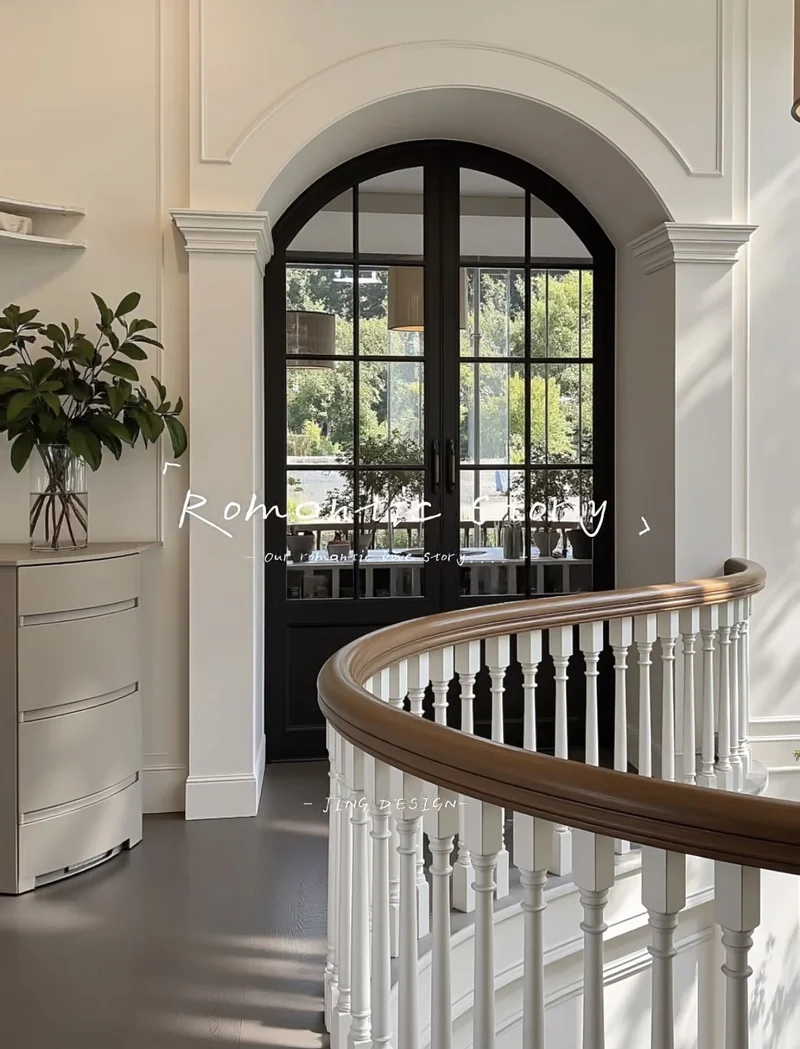
The architectural integrity of a hotel is paramount. Garden doors must function as a seamless extension of the established design language, not a disruptive element. This requires a technical, engineered approach to customization that addresses form, performance, and compliance.
Material Composition & Fabrication
Core material science dictates long-term performance. We engineer doors around stable substrates and advanced composites.
- High-Density WPC (Wood-Plastic Composite) Cladding: Engineered with a controlled wood flour to polymer (typically PVC or PE) ratio, achieving densities >1.1 g/cm³. This results in superior dimensional stability, with water absorption rates below 1.5%, and a Shore D hardness exceeding 75 for impact resistance. It is impervious to rot, insects, and fungal decay.
- LVL (Laminated Veneer Lumber) Core: For larger door formats or where exceptional rigidity is required, an LVL core provides a homogeneous, engineered wood substrate with minimal warping potential. Its cross-laminated structure ensures consistent stability across humidity cycles.
- Aluminum Alloy Frames: Structural profiles are extruded from 6063-T5 or 6063-T6 aluminum alloys, with thermal break technology standard. Powder-coating finishes comply with AAMA 2604 or Qualicoat Class 2 standards for superior weatherability and color retention.
Architectural Integration & Technical Performance
Customization extends beyond aesthetics to measurable performance parameters critical for the hotel environment.
- Acoustic Insulation: Door systems are engineered to achieve sound reduction ratings of Rw 30 dB to Rw 40 dB, depending on glazing and sealing configuration. This is critical for maintaining courtyard tranquility and guest comfort.
- Thermal Performance: The overall U-factor of the installed door assembly can be specified from 1.8 to 0.8 W/(m²·K), utilizing double or triple glazing with low-E coatings and argon fill, coupled with thermally broken frames.
- Fire & Safety Compliance: Glazing can be specified to meet EN 13501-1 or ASTM E84 Class A requirements. Hardware and framing systems are designed to comply with relevant egress and accessibility codes (IBC, ADA, EN 16034).
- Formaldehyde & Indoor Air Quality: All composite wood elements and adhesives comply with E0 (<0.5 mg/L) or E1 (<1.5 mg/L) formaldehyde emission grades as per EN 13986, ensuring healthy indoor air quality.
Customization Parameters & Technical Specifications
| Parameter | Options / Range | Performance Implication | Standard / Test Method |
|---|---|---|---|
| Panel Core | Solid WPC, LVL, Insulated Foam | Structural load, weight, thermal break | EN 14351-1, ASTM E283 |
| Glazing Type | Double/Triple Insulated, Laminated, Tinted | U-factor, Solar Heat Gain, Security, Acoustic | EN 1279, ASTM E2190 |
| Surface Finish | Foil Lamination, Powder Coat, Woodgrain Embossing | Aesthetic match, UV stability, maintenance | AAMA 2604, EN 12206-1 |
| Hardware Integration | Multi-point locking, concealed hinges, threshold type | Security rating, weather sealing, accessibility | EN 12209, ANSI/BHMA A156.115 |
| Operational Style | Slide, Lift-Slide, Swing, Folding | Spatial efficiency, seal compression, wind load | EN 12400, ASTM F2008 |
Quality Assurance & Project Integration
All manufacturing processes are governed under an ISO 9001:2015 certified quality management system. For project execution, we provide detailed shop drawings for architect approval, BIM objects (LOD 400) for clash detection, and full technical submittal packages including material certifications, test reports, and installation methodology statements. This ensures the customized door system is not only an aesthetic match but a performance-guaranteed component of the building envelope.
Technical Specifications and Installation: Ensuring Seamless Integration into Courtyard Gardens
Material Specifications & Performance Data
The structural integrity and long-term performance of courtyard garden doors are dictated by their composite material formulation and core construction.
- WPC (Wood-Plastic Composite) Cladding: High-density (≥1.2 g/cm³) WPC with a wood flour to polymer (typically PVC) ratio not exceeding 60:40 ensures optimal dimensional stability. This formulation yields a low moisture absorption rate (<0.5%) and a Shore D hardness >65, providing resistance to abrasion, fungal decay, and UV degradation without requiring annual staining.
- Engineered Core: Doors utilize a laminated veneer lumber (LVL) or stabilized particleboard core. LVL offers superior load-bearing stability with minimal deflection, critical for large-span installations. Core materials must meet E0 or CARB Phase 2 formaldehyde emission standards.
- Glazing Unit: Insulated glass units (IGU) are standard, filled with argon gas and featuring low-E coatings. Target a U-factor of ≤1.0 W/(m²·K) for thermal insulation. For acoustic isolation in urban settings, specify laminated glass with a polyvinyl butyral (PVB) interlayer to achieve a sound reduction rating (Rw) of 35-40 dB.
- Fire Performance: For enclosed or semi-enriched courtyards, specify door assemblies tested to relevant standards (e.g., EN 13501-1 or ASTM E84), achieving a minimum Class B/s2-d0 or Class C rating.
- Quality Assurance: All components must be sourced from manufacturers certified to ISO 9001, with batch-traceable material data sheets.
Critical Technical Parameters
| Parameter | Specification | Test Standard / Rationale |
|---|---|---|
| Thermal Transmittance (U-factor) | ≤ 1.0 W/(m²·K) | EN ISO 10077-1; Critical for energy efficiency and guest comfort. |
| Sound Reduction Index (Rw) | ≥ 35 dB | EN ISO 10140; Mitigates noise transfer between garden and interior. |
| Moisture Absorption (WPC) | < 0.5% (24h immersion) | EN 317; Predicts swelling resistance in humid garden environments. |
| Formaldehyde Emission | E0 or CARB Phase 2 | EN 16516 / ASTM E1333; Ensures indoor air quality compliance. |
| Fire Reaction Class | Class B/s2-d0 or better | EN 13501-1; Mandatory for specific architectural zones. |
Architectural Integration & Installation Protocol
Seamless integration requires precise pre-installation planning and adherence to engineered procedures.
- Pre-Installation Site Audit: Verify structural opening tolerances are within ±2.5mm of ordered door dimensions. Check for level and plumb of the reveal. Ensure waterproofing of the threshold and adjacent walls is intact and continuous.
- Subframe & Anchoring: Utilize a thermally broken, corrosion-resistant aluminum subframe. Anchor points must be at 400mm maximum centers, using stainless steel fasteners. Shim and seal all connections to the primary structure with a high-performance, UV-stable silicone sealant compatible with both the door system and adjoining materials (stone, render, wood).
- Weather Sealing & Drainage: A multi-chambered perimeter seal system with integrated weep holes for water drainage is non-negotiable. Verify the threshold drainage system is clear and directs water away from the interior.
- Hardware Integration: Specify heavy-duty, corrosion-resistant (minimum 304 stainless steel) multi-point locking gear. Hinges must be sized for the door mass and frequency of use, with adjustable tension settings. All hardware must be aligned and calibrated post-installation to ensure consistent operation and compression of seals.
- Post-Installation Commissioning: Conduct a full operational check of opening/closing mechanics, lock function, and automatic closing devices if fitted. Perform a final inspection of all seal interfaces. Provide the maintenance team with a manufacturer-approved cleaning and seasonal adjustment schedule.
Frequently Asked Questions
What are the critical material specifications for courtyard doors to prevent warping in humid environments?
Opt for engineered wood-plastic composites (WPC) with a density >1,200 kg/m³ and a low moisture expansion coefficient (<0.5%). Doors should feature a fully encapsulated, multi-layer PVC coating (minimum 0.5mm) and an LVL (Laminated Veneer Lumber) core for dimensional stability, effectively resisting the cyclical humidity typical of garden settings.
How do we ensure the door system meets stringent indoor air quality standards for adjacent spaces?
Specify materials with certified E0 or EN 717-1 Class E1 formaldehyde emission levels. For WPC or wood-aluminum composites, verify the resin matrix uses non-toxic stabilizers. The assembly adhesives and finishes must also carry GREENGUARD or similar certifications to guarantee low VOC emissions into guest areas.
What thermal performance should a hotel-grade exterior garden door provide?
Target a U-value below 1.3 W/(m²K). This is achieved with thermally broken aluminum frames, polyamide insulation barriers, and doors featuring a polyurethane foam-insulated core. For glazed sections, insist on double or triple-pane low-E glass with argon fill to minimize heat transfer and condensation.
What design features prevent long-term degradation from UV exposure and physical impact?
Select doors with full-perimeter, automotive-grade PVC or polyurethane coatings applied via co-extrusion. For impact resistance, specify a reinforced lock block area and high-pressure laminate (HPL) surfaces. The finish should include UV-inhibited pigments and a topcoat for colorfastness, ensuring minimal fade and abrasion over years of service.
How is sound insulation addressed for doors separating courtyards from guest rooms?
Aim for a sound transmission class (STC) rating of 30-35 dB. This requires a solid core, magnetic or multi-point perimeter seals, and laminated glass with an acoustic PVB interlayer. The door must be installed with a proper acoustic threshold to create an effective sound barrier from outdoor noise.
What are the procurement benchmarks for hardware and structural longevity?
Specify commercial-grade hardware (e.g., ANSI/BHMA Grade 1) with stainless steel or forged brass components. Hinges must be ball-bearing, and multi-point locking systems are essential. Verify the door leaf and frame are reinforced at stress points to withstand high-frequency use without sagging or operational failure.
How do we verify the product’s compliance and performance claims before procurement?
Demand independent test reports from accredited labs (e.g., for EN 14351-1). Certifications should cover water tightness (Class 7A or higher), air permeability (Class 4), and wind load resistance. Always audit the manufacturer’s quality control processes for raw material sourcing and finishing line consistency.