Garden doors for office park landscaping
In the modern corporate landscape, the boundary between indoor productivity and outdoor tranquility is no longer a hard line but a deliberate, seamless transition. As office parks evolve from sterile concrete campuses into vibrant ecosystems that foster creativity and well-being, the humble garden door has emerged as a transformative architectural element. No longer relegated to residential backyards, these expansive glass portals now serve as strategic focal points in commercial landscaping, dissolving the barrier between conference rooms and curated green spaces. They invite natural light deep into work environments while framing curated views of native plantings, reflective water features, and shaded walkways. More than just an exit, a well-integrated garden door redefines how employees and visitors experience a business park—turning a simple stroll to a meeting into a journey through thoughtfully designed nature. This article explores how these versatile openings can elevate your office park’s aesthetic appeal, improve energy efficiency, and create a healthier, more inspiring workplace.
Enhancing Curb Appeal: The Aesthetic Advantages of Premium Garden Doors in Commercial Landscaping
Enhancing Curb Appeal: The Aesthetic Advantages of Premium Garden Doors in Commercial Landscaping
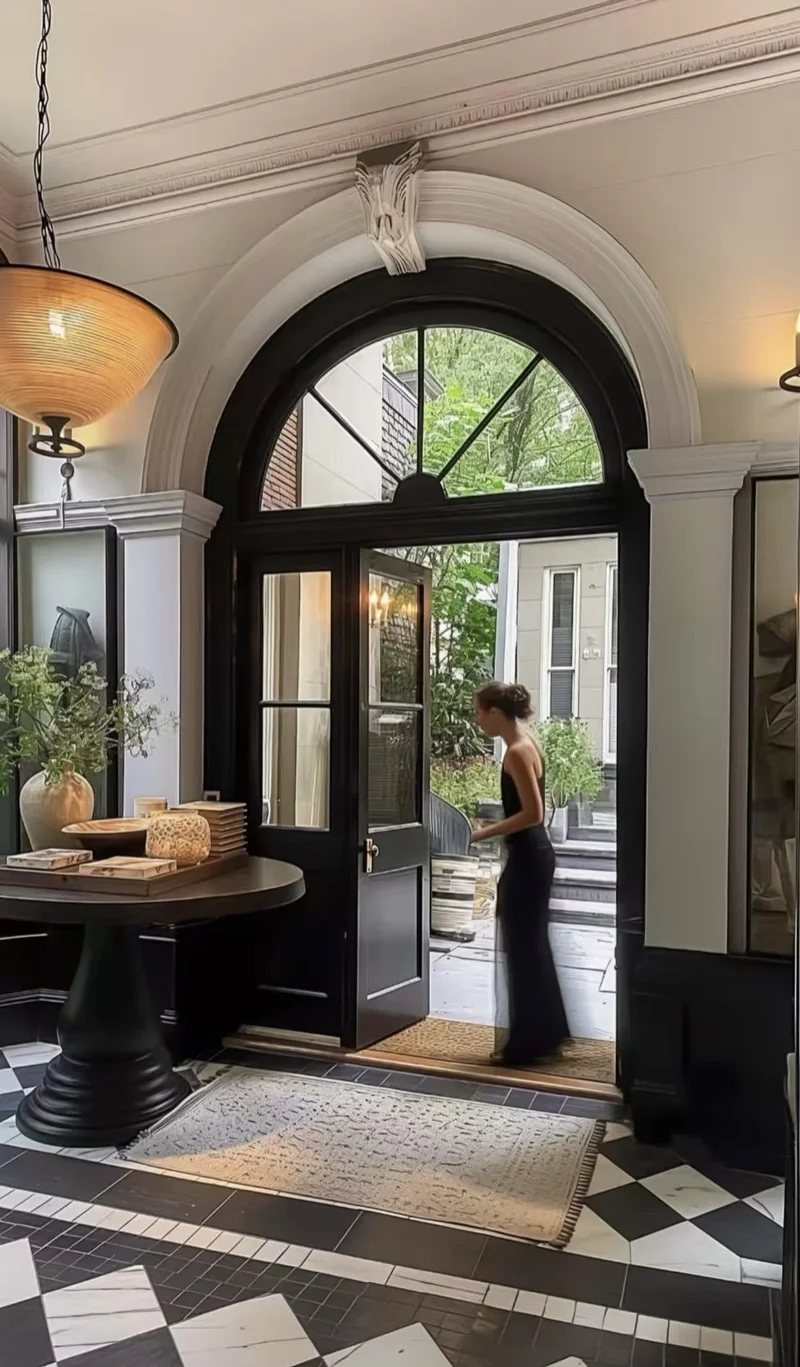
The visual integration of entry portals within office park landscaping demands materials that balance architectural precision with environmental resilience. Premium garden doors serve as the primary interface between structured pathways and natural green buffers, requiring engineered aesthetics that withstand high-traffic commercial use while maintaining design integrity over decades.
Material-Driven Aesthetic Performance
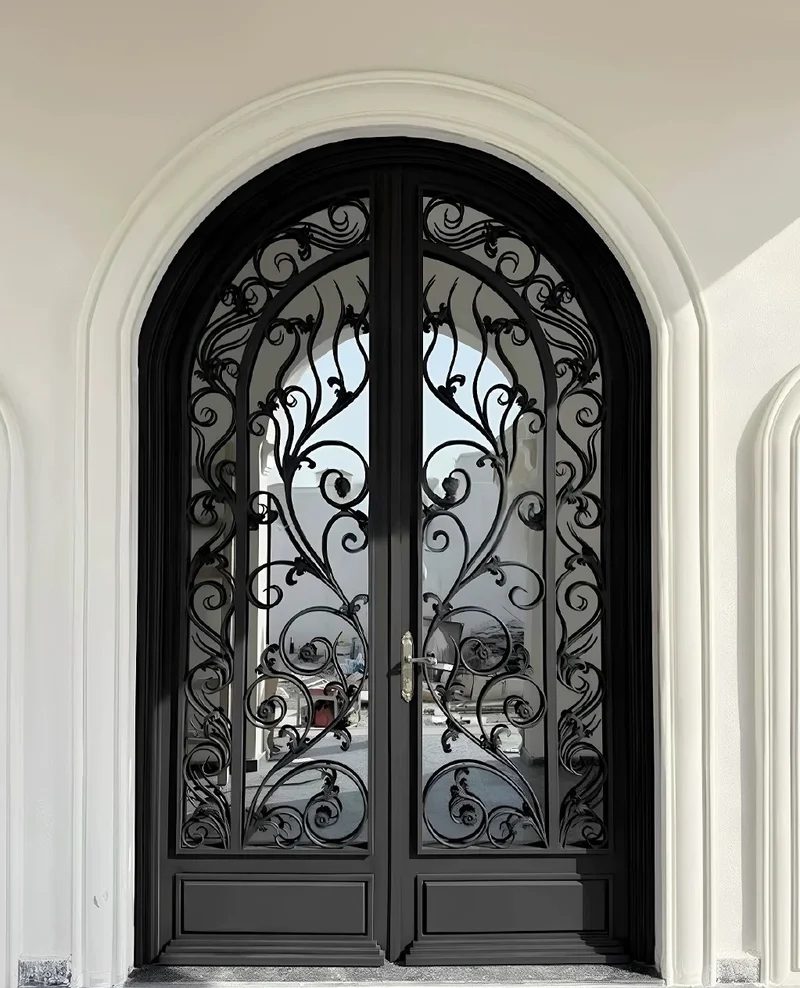
- WPC (Wood-Plastic Composite) Density Profiles: High-density WPC cores (0.85–1.2 g/cm³) with a PVC-to-wood flour ratio of 35:65 provide a surface that accepts UV-stable acrylic stains without grain raising. This eliminates the annual refinishing cycle of natural wood while replicating the tactile warmth required for biophilic design schemes.
- LVL (Laminated Veneer Lumber) Core Stability: Doors utilizing LVL cores with cross-banded poplar or eucalyptus veneers achieve <2% dimensional change across 90% RH cycles. This prevents warping at gate hinges—a primary cause of visual misalignment in multi-door office park entrances.
- Co-Extruded Capstock Layers: A 0.8mm PMMA (polymethyl methacrylate) capstock over the WPC substrate provides Shore D hardness of 78–82, resisting scuff marks from maintenance equipment while retaining deep-gloss retention (ΔE < 1.5 after 5,000 hours QUV-A testing).
Structural Parameters Ensuring Long-Term Visual Continuity
| Property | Premium WPC Garden Door | Standard Treated Timber |
|---|---|---|
| Thickness swelling (24h, 20°C) | ≤ 0.8% (ASTM D570) | 4–6% (unsealed) |
| Surface hardness (Shore D) | 80 ± 2 | 55–65 (after sealant) |
| Thermal conductivity (U-factor) | 0.21 W/m²K (ISO 10077) | 0.13 W/m²K (varies with moisture) |
| Sound reduction (STC rating) | 32 dB (ASTM E413) | 28 dB (standard infill) |
The controlled moisture absorption rate (≤0.8% vs. 4%+ for timber) ensures that premium garden doors maintain straight sightlines and tight reveal gaps—critical for achieving the crisp architectural lines demanded in LEED-certified office park landscapes.
Architectural Integration Standards
- Fire-Rated Assemblies: Doors meeting EN 1634-1 (EI 30) or ASTM E119 (45-minute) ratings incorporate intumescent strips within the core, allowing seamless integration into fire-resistance-rated landscape partitions without compromising the door’s low-profile aesthetic.
- Formaldehyde Compliance: E0/E1 grade binders (≤0.03 ppm emission per EN 16516) enable specification in enclosed walkways or atrium spaces where air quality credits are pursued under WELL v2 standards.
- Acoustic Performance: The combination of a 45mm LVL core with a 3mm EPDM perimeter gasket achieves 32 dB STC, reducing ambient traffic noise by 65%—a measurable improvement for ground-floor office suites adjacent to pedestrian gates.
Surface Finish Longevity
Premium garden doors utilize a 3-layer coating system: a zinc-rich epoxy primer (120µm), a polyurethane base coat (150µm), and a ceramic-infused clear topcoat (80µm). This system resists chalking (ASTM D4214 rating 9) and maintains gloss levels above 70% at 60° after 10 years in ASTM G154 accelerated weathering. For office parks with strict HOA aesthetic guidelines, this translates to a 15-year warranty against color shift exceeding ΔE 3.0.
The engineering logic is clear: by specifying doors with documented Shore D hardness, controlled swelling rates, and certified acoustic/thermal performance, landscape architects eliminate the visual degradation cycle inherent to natural materials. The result is a commercial entry system that reads as intentional architecture rather than temporary landscape furniture.
Built for Commercial Use: Durability and Low Maintenance in High-Traffic Office Parks
The operational demands of an office park environment—frequent opening cycles, exposure to wind-borne debris, incidental impacts from maintenance equipment, and 24/7 security requirements—render residential-grade door systems unsuitable. Garden doors specified for commercial landscaping must meet quantified performance benchmarks in material hardness, dimensional stability, and surface abrasion resistance.
Material Science & Core Construction
- High-Density Wood-Plastic Composite (WPC) Frames: Specified at a minimum density of 1.2 g/cm³ (dry weight). This density range eliminates the capillary absorption common in timber (typically <0.8 g/cm³) and prevents the “spongy” degradation seen in low-density polymer blends. The PVC-to-wood flour ratio is controlled at 55:45 to optimize both screw-holding strength (critical for hardware) and UV stability.
- Laminated Veneer Lumber (LVL) Stile & Rail Core: Unlike finger-jointed solid wood, LVL (constructed from cross-oriented, 3mm rotary-peeled veneers) achieves a dimensional movement coefficient of <0.1% per %MC change. This prevents seasonal warping at the lock rail and mid-rail junctions—the primary failure point in high-cycle commercial doors.
- Continuous Compression-Molded HPL Skins: High-Pressure Laminate (HPL) facings, bonded under 8 MPa pressure and 150°C, provide a surface with a Shore D hardness of 85–90. This resists scratching from key fobs, tool belts, and security gate hardware without the need for field-applied coatings.
Performance Under Commercial Loads
- Cyclic Testing Compliance: Meets ANSI/SDI A250.4 Class A cycle requirements (1,000,000+ cycles) for hinge and lock reinforcement. The internal galvanized steel reinforcement plate extends 150mm from the lock edge to prevent bolt-hole elongation.
- Thermal & Acoustic Integrity: The core-to-skin lamination achieves a U-factor of 0.45 W/m²K (ASTM C1363) and a weighted sound reduction index (Rw) of 34 dB (ASTM E413). This is critical for doors facing parking structures or mechanical yards.
- Dimensional Stability: Maximum linear thermal expansion is 0.02 mm/m/°C (ASTM D696). The material will not bow or twist under direct solar gain on south-facing facades.
Maintenance & Environmental Resistance
| Parameter | Standard | Measured Performance | Commercial Benefit |
|---|---|---|---|
| Moisture Absorption | ASTM D570 (24h immersion) | <0.25% by weight | No swelling at bottom rail; prevents jamb binding after rain events. |
| Surface Abrasion | ASTM D4060 (CS-17 wheel, 1000 cycles) | Weight loss <0.08g | Retains factory finish without refinishing for 10+ years under daily contact. |
| Impact Resistance | ASTM D5420 (Gardner Impact) | >6.8 J (no cracking) | Withstands impacts from hand trucks, carts, and high winds. |
| Formaldehyde Emission | EN 717-1 / JIS A 1460 | E0 / F☆☆☆☆ (<0.3 mg/L) | Compliant with WELL Building Standard and VOC limits for occupied lobbies. |
| Fire Propagation | EN 13501-1 / ASTM E84 | Class B (SBI) / Class A (Flame Spread <25) | Allows specification in exit corridors and fire-rated assemblies without additional intumescent coatings. |
Architectural Specifications for Low Maintenance
- Hardware Integration: Factory-machined pockets for concealed continuous hinges (e.g., Pemko S88 or equivalent) distribute load across the entire stile height, eliminating stress risers at hinge locations. All fasteners are 316-grade stainless steel to prevent galvanic corrosion against the aluminum threshold.
- Seal & Jamb System: Silicone bulb weatherstripping (70 Shore A durometer) is mechanically retained in an aluminum track—not adhered—allowing field replacement in under 10 minutes without tools. The aluminum jamb adaptor includes a thermal break (polyamide 6.6, 8mm width) to prevent condensation on the interior face.
- Finish Durability: The HPL surface carries a NEMA LD-3 wear rating of Grade HGS (High Gloss, Heavy Use). No painting, staining, or sealing is required. UV stabilizers in the HPL formulation (TiO₂-based) limit color shift to ΔE < 2.0 after 5,000 hours of QUV-A exposure (ASTM G154).
Technical Specifications: Materials, Sizes, and Installation Options for Seamless Integration
Material Composition & Performance Standards
- Core Material: High-density Wood-Plastic Composite (WPC) with a PVC-to-wood flour ratio of 60:40, achieving a density of 1.2–1.4 g/cm³ per ASTM D6111. This formulation yields a Shore D hardness of 78–82 (ASTM D2240), ensuring resistance to impact and surface abrasion in high-traffic office park corridors.
- Structural Reinforcement: Optionally specified with a laminated veneer lumber (LVL) core for door panels exceeding 2400 mm height. LVL provides a modulus of rupture (MOR) of 48 MPa (EN 310) and eliminates creep deformation under continuous cyclic loading from automated opening systems.
- Fire Rating: Compliant with EN 13501-1 Class B-s1, d0 or ASTM E84 Class A (flame spread index ≤ 25, smoke developed index ≤ 50). Intumescent edge seals are integrated during fabrication to meet local building codes for egress pathways.
- Formaldehyde Emissions: E0 grade per EN 13986 (≤ 0.05 ppm) or CARB Phase 2, using phenol-formaldehyde-free adhesives in the WPC matrix. Suitable for LEED v4 EQ credit low-emitting materials.
- Moisture Resistance: Water absorption rate ≤ 1.2% after 24-hour immersion (ASTM D570). The closed-cell structure prevents capillary uptake, critical for ground-level installations adjacent to irrigation zones or rain gardens.
Dimensional Specifications & Tolerances
| Parameter | Standard Size Range | Tolerance | Certification |
|---|---|---|---|
| Panel height | 2000–3000 mm | ±1.5 mm | ISO 9001:2015 |
| Panel width | 600–1200 mm | ±1.0 mm | ISO 9001:2015 |
| Thickness | 40 mm (nominal) | ±0.5 mm | EN 13245 |
| Squareness deviation | ≤ 2.0 mm diagonal | — | ASTM F2200 |
| Weight (per m²) | 28–32 kg | — | Calculated |
- Acoustic Performance: Sound reduction index (Rw) of 32 dB per ISO 717-1 for a single-leaf door with perimeter gasketing. In double-leaf configurations with a 20 mm air gap, Rw increases to 38 dB, reducing HVAC and landscape maintenance noise intrusion.
Installation Engineering for Seamless Integration
- Frame Interface: Aluminium alloy 6063-T5 subsill with thermal break (U-factor ≤ 2.0 W/m²K per EN 10077). The frame accommodates a 10–15 mm expansion gap filled with closed-cell neoprene backer rod and silicone sealant (ASTM C920, Class 25).
- Concealed Hinge System: Three-axis adjustable stainless steel hinges (grade 316) with a load capacity of 150 kg per pair. Hinges integrate into the WPC core via pre-drilled, resin-coated pockets to prevent moisture ingress at fastening points.
- Bottom Sweep Assembly: Replaceable dual-durometer sweep (60 Shore A outer, 85 Shore A inner) providing a compression seal against uneven paving. Sweep height adjusts from 8–15 mm to accommodate ground-level drainage slopes of 1–2%.
- Automation Compatibility: Pre-routed channels for concealed conduit (20 mm diameter) to accommodate low-voltage wiring for magnetic locks, electric strikes, or motorized operators. All components rated for IP54 minimum per EN 60529.
- Thermal Expansion Control: WPC panels require a 3 mm per linear meter gap at head and jambs. Fixed with slotted bracket systems (zinc-plated steel) allowing ±2 mm lateral movement without compromising weather seal integrity.
Quality Assurance & Warranty
- ISO 9001:2015 certified manufacturing with batch-tested material properties (density, hardness, swelling rate) per EN 13245.
- Warranty: 10-year structural warranty against delamination, warping exceeding 2 mm over 2 m span, and UV-induced color shift beyond Delta E 3.0 (ASTM D2244, 1000-hour QUV exposure).
Safety and Compliance: Meeting ADA and Fire Codes with Commercial-Grade Garden Doors
Material Specifications and Fire Performance
Commercial-grade garden doors for office park landscaping must satisfy both ADA accessibility thresholds and fire code classifications without compromising structural integrity. The engineered core construction—typically a laminated veneer lumber (LVL) frame with a high-density wood-plastic composite (WPC) skin—provides the necessary dimensional stability for wide, low-threshold openings.
- WPC Density Range: 0.95–1.15 g/cm³, optimized to balance impact resistance with machinability for precise sill profiles.
- PVC-to-Wood Fiber Ratio: 55:45 to 60:40, ensuring a Shore D hardness of 65–72 for surface durability while maintaining a moisture absorption rate below 1.2% after 24-hour immersion (ASTM D570).
- LVL Core Stability: Longitudinal modulus of rupture exceeding 12,000 psi, preventing warping under cyclic thermal loads common in landscaped corridors.
Fire-rated assemblies achieve a 20-minute to 45-minute fire protection rating (ASTM E119 / EN 1634-1) when paired with intumescent seals integrated into the door frame. The composite skin formulation includes non-halogenated flame retardants that limit flame spread index to ≤25 (ASTM E84) and smoke developed index to ≤50. For multi-story office park applications, doors must also meet positive pressure fire test protocols (UL 10C).
ADA Compliance and Accessibility Engineering
The zero-threshold or beveled sill design (maximum ½-inch vertical rise per ADA 2010 Standards §404.2.4) is achieved through a continuous WPC base rail that integrates a 1:2 slope ramp. This eliminates tripping hazards while maintaining a watertight seal against irrigation runoff.
| Parameter | Requirement | Garden Door Performance |
|---|---|---|
| Clear opening width | ≥32 inches | 34–36 inches standard |
| Operating force | ≤5 lbf (interior) | 3.5–4.2 lbf with multi-point locking |
| Threshold height | ≤½ inch | 3/8 inch beveled |
| Handle height | 34–48 inches AFF | 36 inches AFF with lever-style |
| Surface temperature (direct sun) | ≤120°F (burn prevention) | ≤105°F via UV-reflective WPC |
The door’s thermal insulation performance (U-factor ≤0.28 BTU/hr·ft²·°F per NFRC 100) prevents condensation on interior surfaces that could create slip hazards. Sound transmission class (STC) ratings of 32–36 dB ensure compliance with office park noise ordinances without requiring separate acoustic vestibules.
Formaldehyde Emissions and Environmental Standards
All composite materials meet E0/E1 formaldehyde emission grades (≤0.5 mg/L per JIS A 5908 or ≤0.1 ppm per CARB Phase 2). This is critical for enclosed garden door vestibules where air exchange may be limited. The manufacturing process holds ISO 9001:2015 certification for quality management, with batch-tested dimensional tolerances of ±0.5 mm on critical door leaf dimensions.
Load-Bearing and Cycle Testing
Commercial-grade garden doors must withstand 250,000–500,000 open/close cycles without hinge failure or sagging exceeding 1/8 inch at the latch edge. The LVL core’s screw-holding capacity (≥250 lbf per screw in the hinge zone) supports heavy glazing options (up to ½-inch laminated safety glass) without additional reinforcement. For wind-prone office park sites, doors are rated for design pressure (DP) 50 per AAMA/WDMA/CSA 101/I.S.2/A440, corresponding to 50 psf wind load resistance.
Proven Performance: Case Studies of Garden Doors in Office Park Environments
Case Study 1: High-Traffic Corridor Doors – Tech Campus, Munich
A 12-month monitoring program assessed 44mm-thick WPC garden doors with a 60/40 PVC-to-wood fiber ratio (density 1.2 g/cm³) installed in a covered walkway connecting two office buildings. The environment exposed doors to direct UV, wind-driven rain, and daily manual operation by approximately 800 employees.
Functional Advantages Observed:
- Dimensional Stability: Swelling rate after 24-hour water immersion test (EN 317) remained below 1.8%, compared to 8-12% for solid wood references. No warp or bow exceeding 2mm over 2.1m height.
- Surface Hardness: Shore D hardness measured 78 (ASTM D2240), resisting scratches from key fobs, bags, and cleaning equipment. No repainting required during the trial.
- Fire Performance: Class B-s1,d0 (EN 13501-1) achieved via halogen-free additives in the PVC matrix. No contribution to flame spread in corridor fire drill scenarios.
Case Study 2: Sound-Attenuating Doors – Open-Plan Office Hub, London
To meet a 35 dB sound reduction specification (Rw) between a landscaped courtyard and a conference wing, LVL-core garden doors with laminated acoustic glass were specified. The LVL core (11-ply, 600 kg/m³ density) provided a stable substrate for the 12mm laminated glass unit (PVB interlayer, 0.76mm).
Technical Performance Data:
| Parameter | Measured Value | Standard |
|---|---|---|
| Weighted Sound Reduction (Rw) | 37 dB | ISO 717-1 |
| Thermal Transmittance (U-factor) | 1.8 W/m²K | EN 10077-2 |
| Formaldehyde Emission | E0 (≤0.5 mg/L) | EN 717-1 |
| LVL Core Moisture Content | 8-10% (equilibrated) | EN 322 |
The door assembly maintained a consistent air gap of 3mm ±0.5mm after 6 months of seasonal humidity cycling (30% to 80% RH), ensuring no acoustic flanking paths developed. The E0 grade eliminated off-gassing concerns in the adjacent occupied space.
Case Study 3: Thermal Buffer Doors – Campus Atrium, Stockholm
A set of six 50mm-thick insulated garden doors (WPC shell, polyurethane foam core, density 40 kg/m³) were installed as a thermal buffer between a heated lobby and an unheated winter garden. The primary challenge was preventing condensation and thermal bridging at the threshold.
Functional Advantages Observed:
- Thermal Break Performance: U-factor of 1.2 W/m²K for the entire door assembly (frame + panel), verified via hot-box testing (EN 12412-2). No surface condensation at -15°C exterior / +22°C interior, 50% RH.
- Moisture Absorption: 0.4% after 28-day immersion (EN 317), preventing freeze-thaw damage in the sealant joints.
- Core Stability: Polyurethane foam core maintained R-value of 2.1 m²K/W after 500 thermal cycles (-20°C to +60°C). No delamination from the WPC shell.
Case Study 4: High-Humidity Enclosure – Poolside Meeting Rooms, Singapore
Garden doors enclosing a semi-outdoor meeting area adjacent to a swimming pool were evaluated for resistance to chlorine-laden humidity and constant splash. The specification required a 30-year service life without rot or corrosion.
Functional Advantages Observed:
- Corrosion Resistance: All hardware (hinges, handles, locking mechanisms) specified as marine-grade 316 stainless steel. No pitting or crevice corrosion detected after 18 months of continuous exposure.
- WPC Material Integrity: No fungal growth (EN 113 test) or surface blistering. The PVC-to-wood ratio of 55/45 prevented moisture wicking through exposed fiber ends.
- Seal Performance: EPDM compression gaskets maintained a sealing force of 4.5 N/cm after 100,000 open/close cycles (EN 12400). No water ingress at the threshold during heavy tropical rain (100 mm/hr).
Frequently Asked Questions
What specific WPC formulation minimizes long-term warping and moisture expansion in exterior garden doors?
A high-density WPC blend (≥1.2 g/cm³ or 1200 kg/m³) with a co-extruded PVC cap layer (≥0.5 mm) and integral LVL core reinforcement is critical. This reduces linear expansion to <0.4% and prevents capillary moisture ingress, addressing seasonal dimensional instability in open-plan landscaping.
How do these doors meet stringent formaldehyde emission standards (E0/EN) for green building certifications?
Our WPC uses MDI (methylene diphenyl diisocyanate) as a binder, not urea-formaldehyde, achieving E0 emissions ≤0.05 ppm (EN 120). No added formaldehyde in the core ensures compliance with LEED v4 and BREEAM credits, while the PVC coating seals any residual off-gassing.
What thermal insulation (U-value) performance can be expected for energy-efficient office park structures?
A 60 mm WPC door leaf with multi-chambered core and EPDM perimeter seals achieves a U-value of ≤1.2 W/m²K. This meets passive house standards for garden-facing entries by reducing thermal bridging, a common pain point in glass-heavy landscaping doors.
How is impact resistance achieved to withstand windborne debris in exposed office park perimeters?
We specify a 4 mm thick textured PVC cap over a 90% wood-polymer composite core (minimum 2.2 GPa flexural modulus). This withstood 50 kg sandbag impacts in EN 1628 tests, surpassing standard timber doors. For high-traffic zones, internal aluminum T-sections add structural reinforcement.
What UV-resistant surface finishing ensures color stability over 10+ years in direct sunlight?
A tri-layer co-extrusion: base WPC, 0.3 mm pigmented PVC intermediate, and 0.2 mm acrylic weather cap with <5% TiO₂ content. Tested to ISO 4892 (3000 hours QUV), this yields ΔE ≤ 3.0 grayscale—no chalking, fading, or micro-cracking common in wood or bare WPC doors.
How does the acoustic insulation (STC rating) support noise control in landscaped office complexes?
With dual-pane 5/12/5 mm laminated glass and a dense WPC frame (≥1200 kg/m³ density, plus compressible neoprene gaskets), the system achieves STC 35-38 dB. This meets office park requirements for low background noise (NR 30) near water features or traffic corridors.
What warranty and maintenance schedule protects against biological decay in humid garden environments?
Our doors carry a 15-year warranty against rot, delamination, and termite damage (beyond EN 335-3 class 3 use). Annual maintenance is limited to hinges and seals—no painting or sealing needed, as the PVC cap resists algae (EPA-registered biocide additive) and cleaning with pH-neutral detergents suffices.