Weatherproof Wooden Garden Doors for Villa Yards – Durability Meets Elegance
Imagine a seamless transition between the refined elegance of your villa and the natural serenity of your garden—framed by a wooden door that stands resilient against the elements without sacrificing beauty. Wooden garden doors, masterfully crafted and enhanced with advanced weatherproof coatings, offer the perfect fusion of enduring strength and timeless design. Ideal for the discerning homeowner, these doors withstand humidity, UV exposure, and seasonal shifts while preserving their rich grain, luster, and structural integrity. From classic teak to sustainable hardwoods, each door is treated with protective finishes that repel moisture, resist warping, and prevent fungal growth—ensuring longevity without compromising aesthetic appeal. Whether opening to a sun-drenched courtyard or a secluded retreat, weatherproof wooden garden doors elevate outdoor living spaces with sophistication and reliability. More than just an entryway, they become a statement of craftsmanship and thoughtful design, harmonizing luxury with resilience in every grain.
Why Wooden Garden Doors Enhance Villa Yard Aesthetics and Value
-
Natural Aesthetic Harmony
Wooden garden doors possess an intrinsic visual warmth that synthetic materials struggle to replicate. Their organic grain patterns, tonal variations, and tactile finish complement the natural landscaping of villa yards, creating a seamless transition between built architecture and outdoor environments. Whether the design leans toward traditional, rustic, or contemporary aesthetics, solid wood doors offer unparalleled versatility in finish and craftsmanship, enhancing the overall visual narrative of the property. -
Architectural Enhancement and Curb Appeal
A villa’s exterior impression begins at its boundaries. A well-crafted wooden garden door acts as a focal point, signaling quality and attention to detail. When aligned with the architectural language of the villa—be it Mediterranean, modern minimalist, or colonial—the door elevates curb appeal through proportion, material authenticity, and design coherence. This aesthetic contribution directly influences perceived property value, often serving as a key element in high-end real estate presentations.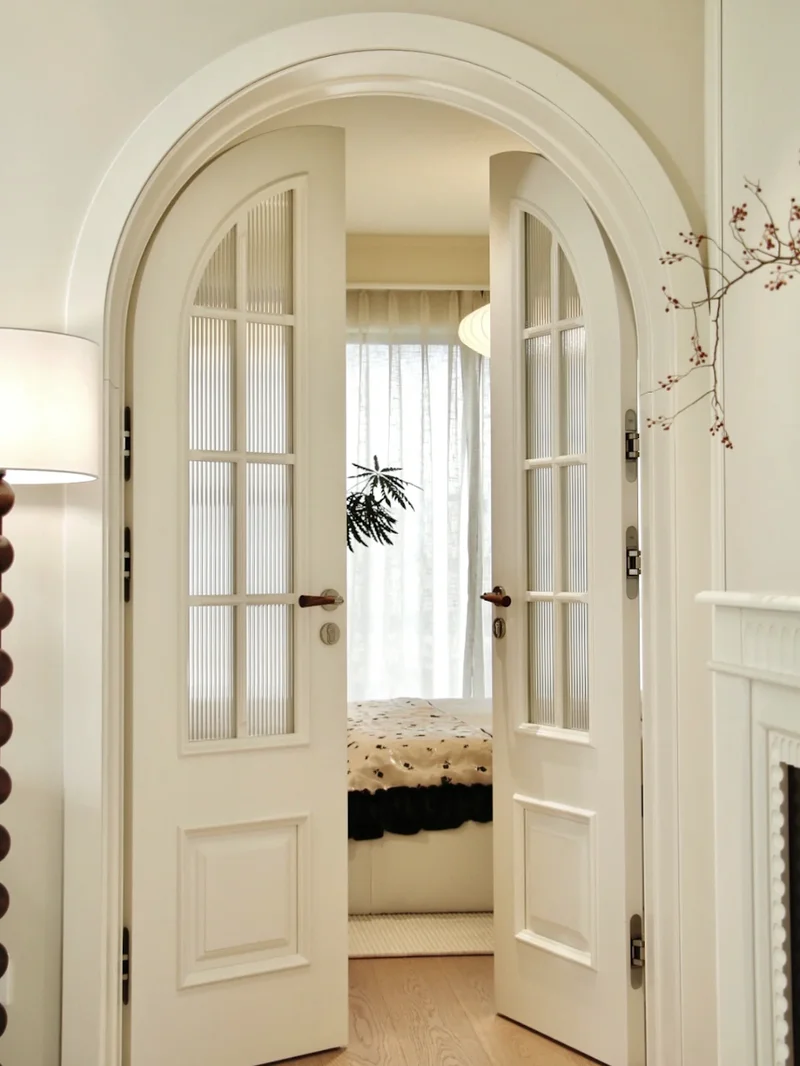
-
Material Prestige and Perceived Value
Wood remains a premium material in architectural design, associated with longevity, craftsmanship, and luxury. Unlike metal or composite alternatives, wooden doors convey a sense of heritage and permanence. When constructed from durable hardwoods—such as teak, iroko, or accoya—and treated with advanced weatherproofing technologies, these doors combine the elegance of natural wood with resilience against moisture, UV exposure, and dimensional instability. This fusion of beauty and performance reinforces the perception of a meticulously maintained, high-value property. -
Increased Property Valuation
Studies in residential real estate indicate that high-quality exterior elements significantly impact market valuation. A weather-resistant wooden garden door, properly sealed and engineered for longevity, contributes to both functional longevity and aesthetic capital. It signals to potential buyers or appraisers that the property integrates durable, upscale materials throughout its design, thereby justifying a higher valuation. Furthermore, such doors often form part of curated outdoor living spaces—a growing priority in luxury villa markets. -
Long-Term Return on Investment
While initial costs may exceed those of standard alternatives, premium wooden garden doors deliver long-term returns through sustained appearance, minimal degradation, and enduring demand among discerning buyers. Their ability to age gracefully, especially with periodic maintenance, ensures that aesthetic and functional benefits compound over time. In the context of villa estates, where design integrity and material authenticity are paramount, wooden garden doors are not merely entry points—they are strategic enhancements to property equity.
The Importance of Weatherproof Coating for Outdoor Wooden Doors
- Protects against moisture infiltration and dimensional instability
- Prevents warping, swelling, and delamination of wood substrates
- Shields against UV degradation to preserve color and structural integrity
- Inhibits mold, mildew, and fungal growth in high-humidity environments
- Enhances longevity and reduces lifecycle maintenance costs
Outdoor wooden doors, particularly in villa settings where aesthetics and performance are paramount, are continuously exposed to environmental stressors. Unprotected timber is highly susceptible to moisture absorption, leading to swelling, warping, and eventual structural compromise. A high-performance weatherproof coating serves as the first line of defense, forming a resilient barrier that prevents water ingress while allowing trapped moisture within the wood to escape—critical for maintaining dimensional stability.
Ultraviolet (UV) radiation from prolonged sun exposure accelerates photodegradation, causing surface fibrillation, graying, and loss of natural luster in wood. Quality coatings incorporate UV stabilizers and absorbers that mitigate solar damage, preserving both the visual appeal and mechanical properties of the door over time. This is particularly vital for garden-facing entrances where doors receive direct sunlight for extended periods.
In coastal or high-humidity climates, the risk of biological deterioration increases significantly. Weatherproof coatings with biocidal additives prevent the colonization of mold, mildew, and wood-rotting fungi—organisms that degrade lignin and cellulose, weakening the material at a microscopic level. This protection is not merely cosmetic; it maintains the door’s structural soundness and air-sealing capabilities.
Furthermore, a durable finish reduces the frequency and intensity of maintenance interventions. Without proper coating, wooden doors require frequent sanding, refinishing, and inspection—increasing long-term costs and downtime. A premium weatherproof system, properly applied and periodically maintained, can extend service life by decades, delivering substantial return on investment.
Ultimately, the integration of advanced weatherproof coating technology ensures that outdoor wooden doors fulfill dual mandates: enduring performance under climatic extremes and sustained elegance that complements high-end architectural design. For villa applications where both durability and aesthetic refinement are non-negotiable, such protection is not optional—it is fundamental.
Top Wood Types for Durable and Stylish Garden Doors in Villas
- Teak
- Iroko
- Siberian Larch
- Accoya® Modified Wood
Teak (Tectona grandis) remains the benchmark for premium garden doors in high-end villas, combining exceptional durability with timeless aesthetics. Its natural oil content—up to 15% by volume—grants unparalleled resistance to moisture, fungal decay, and insect attack, ensuring longevity exceeding 30 years with minimal maintenance. The rich golden-brown hue matures into a distinguished silvery-grey patina, adding character without compromising structural integrity. Teak’s dimensional stability minimizes warping, making it ideal for large, engineered panels in expansive villa entrances.
Iroko (Milicia excelsa), often termed “African Teak,” offers a cost-effective alternative with comparable performance. Dense and interlocked in grain, Iroko exhibits excellent resistance to rot and weathering. While slightly more prone to movement than teak, modern kiln-drying protocols mitigate this. Its warm, medium-brown tone and prominent grain patterns lend visual depth, appealing to contemporary and traditional villa designs alike. Pre-finishing with UV-stable oils preserves its color and enhances surface protection.
Siberian Larch (Larix sibirica) is a coniferous hardwood renowned for extreme cold and moisture resistance. Sourced from slow-growth forests, its dense latewood provides high natural durability (Class 3–4 per EN 350), particularly when quartersawn. The pronounced grain and amber resin streaks create a striking aesthetic, well-suited to modern Scandinavian or alpine villa architecture. Proper detailing—such as elevated thresholds and overhangs—complements its performance in high-humidity environments.
Accoya® represents the frontier of modified wood technology. Through acetylation, its cell structure is permanently altered, achieving Class 1 durability (equivalent to tropical hardwoods) and dimensional stability exceeding 75% compared to unmodified softwoods. With a Janka hardness of approximately 4.0 kN, it resists dents and abrasion. Its uniform texture accepts stains and paints uniformly, enabling seamless integration with architectural finishes. Though not a natural species, its 50-year above-ground warranty makes it a compelling choice for precision-engineered doors.
Each wood type balances performance and elegance, but selection must consider climate, design intent, and lifecycle costs. Proper engineering, finishes, and installation are critical to realizing their full potential.
How Advanced Weatherproof Coatings Protect Against Sun, Rain, and Pests
- Advanced weatherproof coatings serve as a critical defense mechanism for wooden garden doors, ensuring long-term resilience against environmental stressors such as solar radiation, moisture intrusion, and biological degradation. These multi-functional barriers are engineered at the molecular level to preserve both structural integrity and aesthetic value in demanding outdoor conditions.
Ultraviolet (UV) radiation from prolonged sun exposure initiates photodegradation in wood, breaking down lignin and causing surface graying, warping, and embrittlement. High-performance coatings incorporate UV absorbers and hindered amine light stabilizers (HALS) that neutralize free radicals and dissipate solar energy. This significantly slows photo-oxidation, maintaining the wood’s natural tone and grain definition over years of exposure.
Rain and humidity pose equally severe threats, as cyclic moisture absorption and desorption lead to swelling, checking, and dimensional instability. Premium coatings employ hydrophobic resins—such as acrylics, polyurethanes, or silicon-modified polymers—to form a continuous, impermeable film. This film prevents water ingress while allowing trapped moisture vapor to escape, minimizing hydrostatic stress and reducing the risk of delamination or fungal growth.
Equally critical is protection against biological pests. Termites, carpenter ants, and wood-boring fungi exploit microscopic cracks and moisture-laden substrates. Advanced formulations integrate bio-resistant additives—such as borate esters or organic biocides—that deter insect colonization and inhibit fungal spore germination. These agents are bound within the coating matrix, ensuring controlled, long-term release without surface depletion.
| Coating Component | Function | Environmental Threat Mitigated |
|---|---|---|
| UV absorbers & HALS | Neutralize free radicals, reduce oxidation | Solar radiation |
| Hydrophobic polymers | Block liquid water, allow vapor diffusion | Rain, humidity |
| Bio-resistant additives | Inhibit pest infestation and mold growth | Insects, fungi |
These coatings are typically applied in multi-layer systems: a penetrating primer for deep adhesion, followed by cross-linking topcoats that enhance scratch resistance and gloss retention. The result is a durable, low-maintenance surface that upholds the elegance of natural wood while delivering industrial-grade protection. For villa-grade garden doors exposed to subtropical monsoons or arid UV intensity, such advanced weatherproofing is not optional—it is essential for sustained performance and curb appeal.
Custom Design Ideas for Wooden Garden Doors in Luxury Villa Landscapes
-
Incorporate intricate marquetry or inlay work using contrasting hardwoods such as ebony, padauk, or zebrawood to create geometric, floral, or heraldic motifs that reflect the architectural style of the villa. These bespoke patterns elevate the door from functional element to art object, ensuring alignment with the estate’s aesthetic narrative.
-
Integrate concealed, frame-mounted stainless steel hardware with soft-close mechanisms and multi-point locking systems. These components preserve the door’s clean visual lines while meeting stringent security and longevity standards required in high-end residential environments.
-
Design double doors with a raised panel or mullion-and-transom configuration, mirroring adjacent interior elements such as library or foyer doors to establish continuity between indoor and outdoor spaces. Use radial-sawn oak or thermally modified ash for dimensional stability and refined grain expression.
-
Embed discreet, low-voltage LED lighting within the door’s perimeter or reveal zones to accentuate craftsmanship after dark. Opt for warm temperature (2700K–3000K) fixtures with diffused optics to ensure subtle illumination without glare.
-
Employ a layered lamination technique using sustainably sourced hardwood veneers over a sealed marine-grade plywood core to balance weight, warpage resistance, and structural integrity. This engineered approach enhances performance in fluctuating microclimates typical of landscaped villa grounds.
-
Consider asymmetrical proportions or arched crowns inspired by Palladian, Art Deco, or contemporary minimalism, depending on the villa’s design language. A custom radius top with hand-finished crown molding can serve as a focal point within the garden axis.
-
Apply a multi-stage finishing protocol: sealant primer, UV-stable acrylic-epoxy barrier coat, and topcoats of natural oil or microporous alkyd resin. This system protects against fungal degradation, moisture ingress, and solar radiation while preserving tactile warmth and grain depth.
-
Offer biophilic integration by incorporating living elements—such as recessed planter troughs in the threshold or side jambs for trailing ivy or jasmine—designed with waterproof liners and drainage to avoid wood contact with sustained moisture.
-
Collaborate with landscape architects to align sightlines, hinge swing, and threshold elevation with hardscape materials and circulation paths, ensuring seamless transition and accessibility without compromising design intent.
Each custom solution must be engineered for regional climatic stressors—coastal salinity, alpine freeze-thaw cycles, or high-humidity subtropical zones—through material selection, joint detailing, and protective coatings calibrated to site-specific conditions.
Frequently Asked Questions
What makes wooden garden doors suitable for villa yards?
Wooden garden doors offer natural elegance, durability, and excellent structural integrity, making them ideal for enhancing the aesthetic and functional value of villa yards. When crafted from high-quality hardwoods like teak, ipe, or oak, they combine visual warmth with resilience. Engineered designs ensure dimensional stability, while customization options allow seamless integration with luxury landscaping and architectural styles.
How does a weatherproof coating protect wooden garden doors?
A weatherproof coating forms a protective barrier that shields wood from moisture absorption, UV degradation, fungal growth, and thermal expansion. High-performance finishes like microporous acrylics, oil-based sealers, or marine-grade polyurethanes penetrate deep into the grain, maintaining breathability while preventing warping, cracking, and rot—critical for maintaining doors in exposed outdoor environments.
Which wood species are best for weather-resistant garden doors?
Teak, ipe, white oak, and cumaru are top-tier choices due to their natural oils, high density, and resistance to decay. These species have Class A durability ratings and minimal shrinkage, ensuring long-term performance under fluctuating climates. Pre-weathered or kiln-dried selections further enhance stability prior to coating application.
How often should weatherproof coatings be maintained on wooden garden doors?
Re-coating is typically required every 2–3 years for oil-based finishes and 4–5 years for advanced polymer-based systems, depending on sun exposure and climate severity. Annual inspection for sheen loss, water beading failure, or minor cracks is recommended. Light sanding and reapplication restore protection without full refinishing.
Can wooden garden doors with weatherproofing resist extreme temperatures?
Yes, when properly sealed and constructed using engineered joinery (e.g., mortise-and-tenon or tongue-and-groove), these doors can withstand temperature extremes from freezing winters to hot summers. The coating minimizes hygroscopic movement, while thermal expansion gaps and stainless-steel hardware eliminate structural stress.
What type of weatherproof finish is best for UV protection?
Pigmented oil finishes with UV inhibitors (e.g., Sikkens Cetol) or water-repellent semi-transparent stains provide optimal UV resistance. Unlike clear varnishes—which degrade rapidly—these finishes absorb and scatter UV rays while allowing natural wood aging. Darker pigments enhance sun protection but may alter original color intent.
Are metal reinforcements compatible with weatherproof wooden doors?
Yes, stainless steel or aluminum reinforcement bars, hinges, and frame brackets can be embedded during fabrication without compromising the finish. These elements improve security and longevity while remaining corrosion-resistant. Proper sealing at junctions prevents moisture ingress and galvanic corrosion.
How do thermal and humidity changes affect coated wooden doors?
Wood expands and contracts with humidity; however, a high-quality microporous coating allows moisture vapor transmission while blocking liquid water, reducing stress on fibers. Proper acclimatization before installation and maintaining a 5–10 mm expansion gap around the frame mitigate movement-related damage.
What installation practices ensure long-term weather resistance?
Professional installation includes pre-hanging in a dry environment, use of stainless fasteners, proper sill flashing, and clearance of at least 50 mm above ground level. Back-priming and sealing all edges, including top and bottom rails, before installation prevent capillary uptake and enhance coating efficacy.
How does custom engineering improve performance in villa settings?
Custom doors are crafted to match architectural load requirements, wind loads (especially in coastal areas), and aesthetic continuity. Features like double rabbeted edges, storm strips, and multi-point locking systems—combined with precision CNC machining—ensure air-tight sealing and structural endurance.
Can eco-friendly coatings provide adequate weather protection?
Yes, modern bio-based finishes derived from linseed oil, soy resins, or natural waxes (e.g., those certified by Greenguard or Cradle to Cradle) now deliver competitive durability and water resistance. These environmentally responsible options maintain breathability and are ideal for sustainable luxury developments.
What design elements enhance both security and aesthetics in wooden garden doors?
Integrated steel cores, multi-point locking mechanisms, and laminated hardwood construction enhance security without sacrificing appearance. Aesthetic elements like fretwork, arched tops, or concealed hinges can be combined with ballistic-grade glazing or side panels for a balance of privacy, light control, and elegance.